Diverse Legal Landscapes Shaping Live Dealer Mobile Features for Enhanced Player Safety
Written by Ben Hansen · Oct 29, 2026

Diverse Legal Landscapes Shaping Live Dealer Mobile Features for Enhanced Player Safety
Regulatory frameworks in various regions dictate how mobile live dealer platforms incorporate responsible play mechanisms, with each jurisdiction imposing distinct requirements on features such as session timers, deposit thresholds, and self-exclusion protocols. These differences arise because states and countries maintain separate licensing standards for online gambling operators that stream real-time dealer interactions for games like blackjack and roulette. Data from industry reports shows that compliance demands often determine which tools appear in apps available to players in specific markets, creating a patchwork of user experiences.
Core Regulatory Variations Across Key Markets
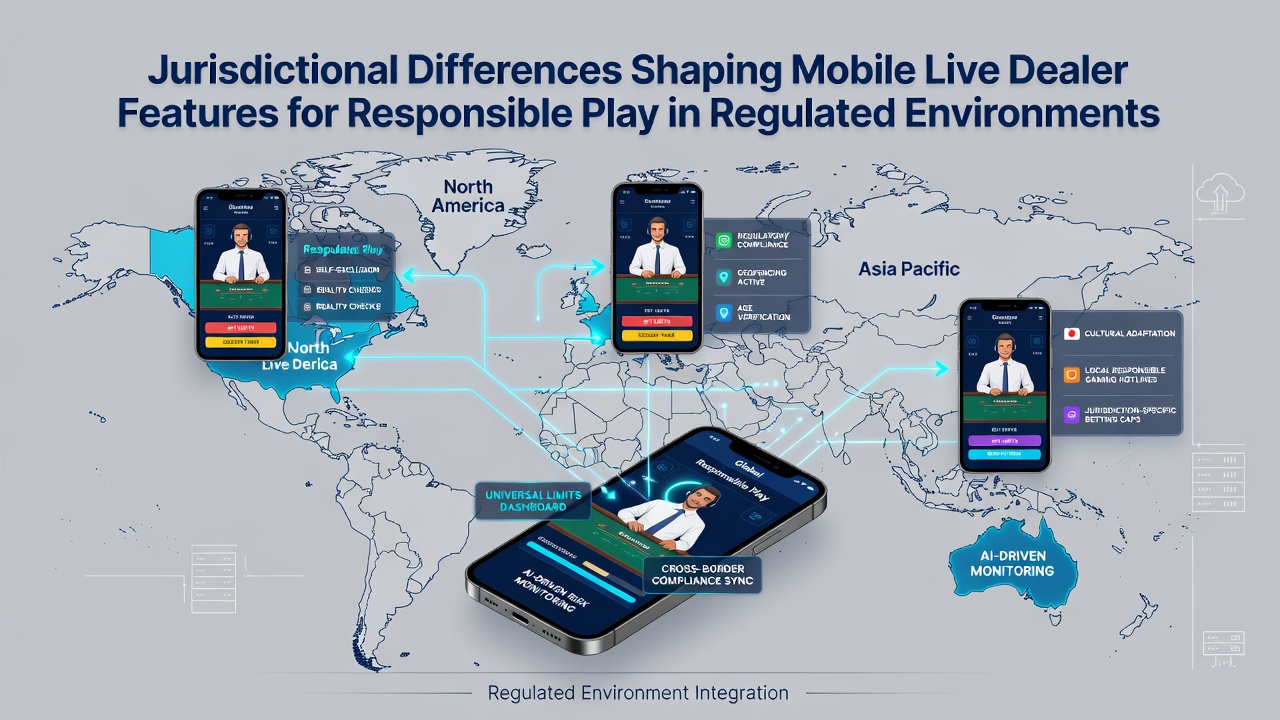
North American jurisdictions present one set of mandates while European and Asian regulators enforce others, and observers note that these distinctions directly affect mobile app design. In New Jersey, for instance, the Division of Gaming Enforcement requires operators to integrate mandatory reality checks that interrupt live sessions at fixed intervals, whereas certain Canadian provincial authorities focus more on voluntary limit-setting tools that players activate before joining tables. Australian state rules emphasize geolocation verification combined with spending caps that reset daily, and these provisions shape how software developers code live dealer interfaces for that market.
Operators must adapt their platforms because failure to meet local standards blocks market access, and figures from regulatory filings reveal that companies routinely maintain separate code branches for each licensed territory. One study from a research institution tracking digital gambling trends found that apps serving multiple regions often disable certain features in stricter zones to avoid penalties, which means players in one area encounter more frequent prompts than those elsewhere.
Impact on Live Dealer Session Management Tools
Live dealer streams introduce unique technical challenges for responsible play features because the real-time video feed must remain uninterrupted while compliance alerts activate. Jurisdictions like those in the European Union require persistent on-screen timers visible throughout roulette or baccarat rounds, yet some U.S. states allow these indicators to appear only at session start and at preset breaks. Software providers respond by building modular systems that toggle elements based on detected player location, and this approach ensures adherence without rebuilding entire applications for each regulator.
Deposit and loss limit implementations also diverge sharply, with data indicating that certain markets enforce automatic halts once thresholds are reached while others rely on player-initiated pauses. In October 2026, updates to compliance checklists in several provinces highlighted the need for seamless integration between banking modules and live table interfaces, preventing users from bypassing safeguards through rapid fund transfers. Experts tracking these changes report that such adjustments reduce unauthorized play patterns in monitored environments.
Self-Exclusion and Verification Protocols
Self-exclusion databases operate differently depending on whether a jurisdiction maintains a centralized registry or leaves management to individual operators, and this distinction influences how quickly mobile users can activate restrictions across live dealer offerings. Centralized systems in some regions allow instant blocking that spans multiple platforms, whereas fragmented approaches require separate registrations for each licensed site. Verification technologies must align with these structures, often incorporating biometric checks or government ID cross-references that vary in stringency by location.
Research indicates that platforms serving both domestic and international audiences frequently layer additional verification steps in markets with higher mandated standards, and this layering affects onboarding speed for new live dealer participants. Those who've analyzed compliance trends observe that operators prioritize regions with clearer guidelines first when rolling out new features because ambiguity in rules can delay deployment by months.
Technical Adaptations by Platform Developers
Developers build configurable APIs that pull jurisdiction-specific rules from backend databases at login, enabling dynamic adjustment of responsible play elements without user intervention. This method supports games streamed from shared studios while tailoring alerts and limits to the accessing device's detected regulatory zone. Evidence from technical whitepapers shows that such architecture reduces update cycles and helps operators stay current with evolving statutes across borders.
Case examples include studios that serve both U.S. state markets and overseas territories, where the same dealer feed displays different overlay messages depending on player origin. These adaptations maintain engagement while satisfying local mandates, and industry associations note that standardized testing protocols help verify functionality before launches in new areas.
Conclusion
Jurisdictional differences continue to guide the evolution of mobile live dealer responsible play features as regulators refine their approaches to player protection in expanding markets. Operators and developers respond through modular designs that accommodate varying requirements on session controls, limits, and exclusions, ensuring licensed platforms meet standards without compromising core gameplay. Ongoing adjustments reflect the need to balance regulatory compliance with functional streaming experiences across diverse legal environments.