Evolving State Licenses Drive Changes in Fairness Algorithms for Interstate Digital Table Games
Written by Tina Bennett · Jul 28, 2026
Evolving State Licenses Drive Changes in Fairness Algorithms for Interstate Digital Table Games
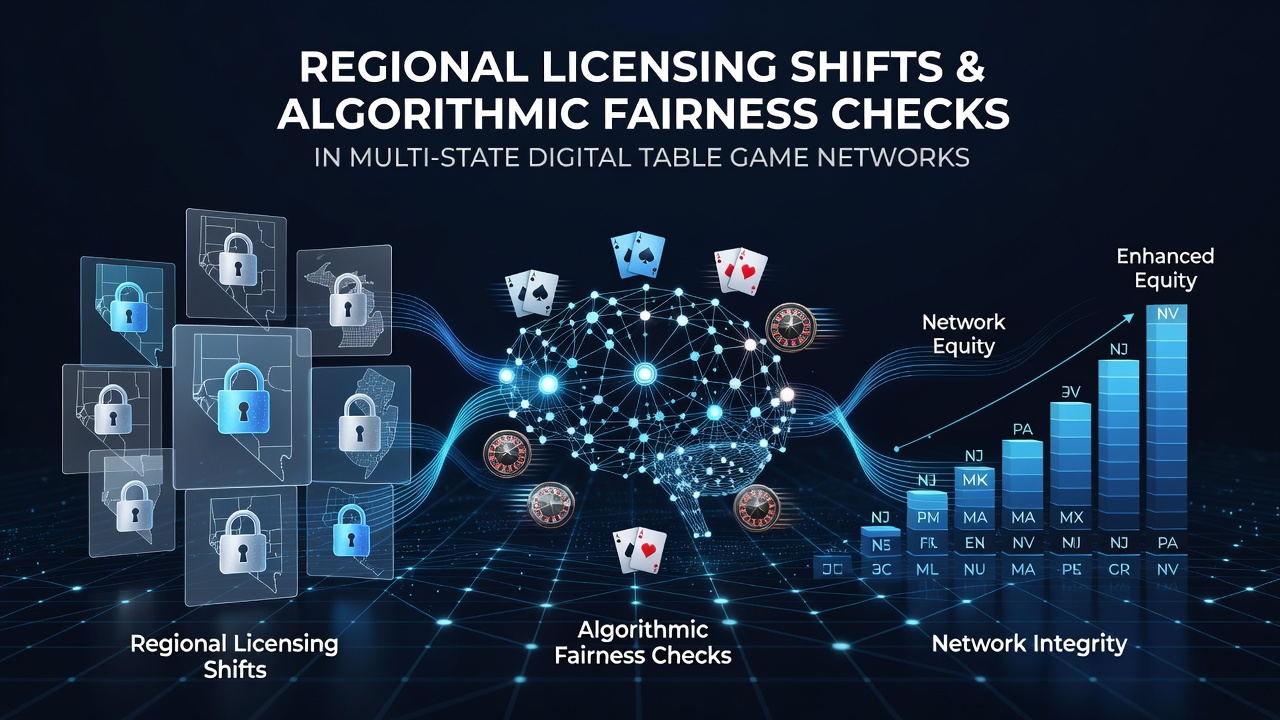
State licensing frameworks have expanded rapidly since 2024, and operators managing digital table game networks now face distinct compliance layers that directly modify how fairness algorithms evaluate random number generators, payout distributions, and session monitoring tools. Regulators in New Jersey, Pennsylvania, and Michigan each impose separate audit frequencies and statistical thresholds, which forces platform developers to adjust core code modules so that a single multi-state environment satisfies every jurisdiction simultaneously.
Regional Licensing Patterns Shape Core Algorithm Requirements
Developers integrate state-specific parameters into shared codebases, and these parameters alter seed generation intervals, bias detection windows, and minimum sample sizes for statistical testing. When a license renewal in one state adds new variance limits on blackjack side bets, the fairness engine must recalibrate its monitoring thresholds across all connected jurisdictions to prevent cross-state data conflicts. Observers note that such recalibrations often occur through modular configuration files rather than full system rewrites, yet each update still requires fresh certification from every participating gaming control board.
Data from the American Gaming Association shows that interstate table game handle grew 19 percent year-over-year through the first half of 2026, and this growth coincides with an increase in simultaneous licensing applications. Platforms therefore maintain parallel fairness rule sets that activate according to user location at login, which ensures that a player in Ohio encounters different internal checks than one in West Virginia even though both connect to the same backend servers.
Algorithmic Adjustments for Multi-State Compliance
Table game fairness algorithms now incorporate geo-fenced rule engines that reference real-time license status databases, and these engines modify payout verification routines accordingly. For example, a state that recently tightened rules on progressive jackpot seeding may require shorter audit cycles, prompting the algorithm to log additional entropy samples during each hand. Researchers at the University of Nevada, Reno documented similar patterns in a 2025 technical report that examined how licensing amendments propagate through RNG certification pipelines.
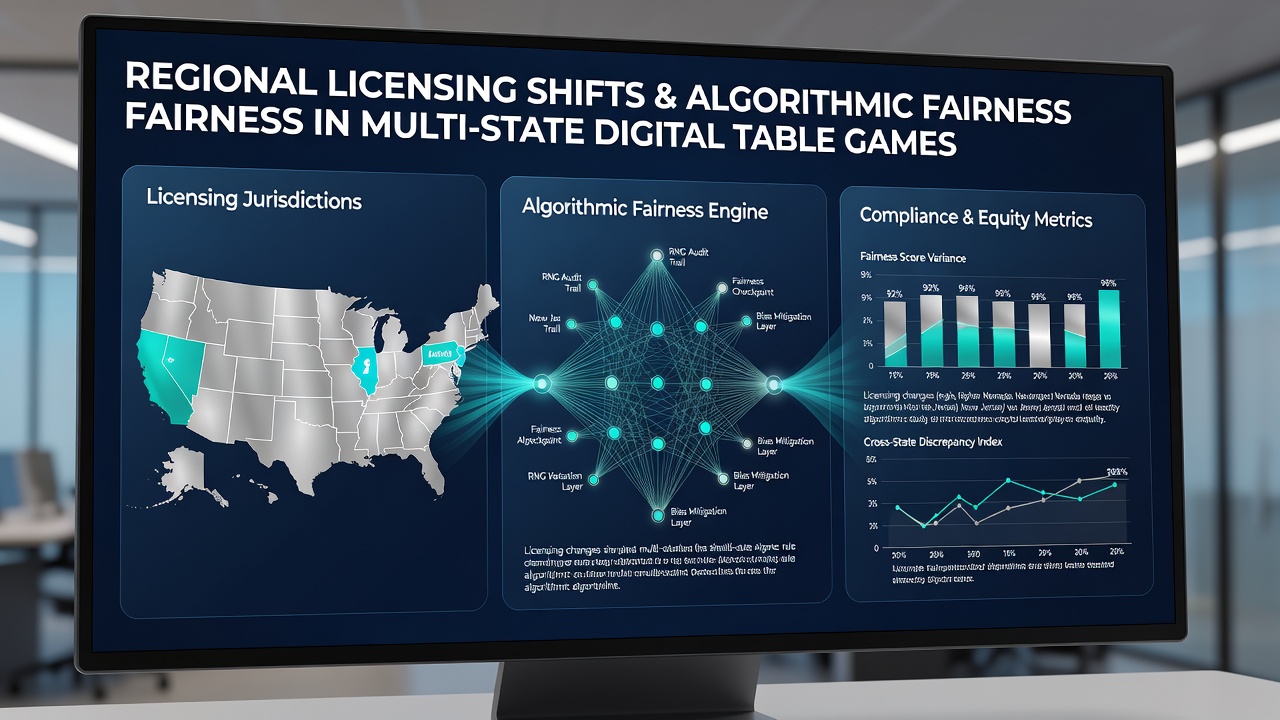
Operators report that maintaining these layered checks adds measurable latency to session initialization, yet the overhead remains within acceptable margins because most adjustments occur at the configuration layer. When Michigan updated its responsible gaming integration mandates in early 2026, several networks responded by embedding additional session-time fairness flags that trigger only for Michigan IP addresses, leaving other states unaffected.
Certification Workflows and Data Sharing Protocols
Gaming control boards increasingly require operators to submit jurisdiction-specific fairness datasets rather than aggregated national figures, and this requirement has prompted the creation of automated reporting pipelines that segment data by license territory. The Nevada Gaming Control Board and the Pennsylvania Gaming Control Board both accept API-delivered audit packages, yet each board specifies unique file formats and retention periods that the central algorithm must accommodate during export.
July 2026 brought a coordinated update cycle across five states that simultaneously revised their digital table game testing standards, and networks responded by deploying a unified patch that adjusted bias-detection sensitivity levels for all affected licenses. Industry associations such as the European Gaming and Betting Association have published comparative analyses showing that such synchronized updates reduce long-term maintenance costs even though initial integration work increases.
Future Trajectories for Cross-Border Fairness Systems
Continued expansion of multi-state agreements will likely push developers toward more granular rule engines capable of handling dozens of simultaneous license profiles without performance degradation. Academic studies from Canadian institutions have explored similar challenges in provincial online gaming networks, and those findings suggest that modular fairness architectures scale more effectively than monolithic ones when regulatory conditions diverge. Operators continue to refine these systems through iterative testing that aligns algorithmic outputs with each state's current statutory language.
Conclusion
Regional licensing shifts continue to redefine the technical boundaries within which fairness algorithms operate, and networks that manage digital table games across multiple states must sustain flexible architectures to remain compliant. Data indicates that certification volumes and reporting granularity will keep rising through the remainder of 2026, which places ongoing pressure on both developers and regulators to coordinate standards without compromising jurisdictional autonomy.