Regulatory Thresholds Reshaping Adaptive Reel Features Across Interstate Mobile Casino Networks
Written by Paul Hartmann · Aug 18, 2026

Regulatory Thresholds Reshaping Adaptive Reel Features Across Interstate Mobile Casino Networks
Regulatory thresholds in various states have begun to influence how adaptive reel features operate within interstate mobile casino networks, with compliance requirements driving modifications to slot mechanics that respond to player activity and jurisdictional rules. Data from industry reports shows that operators must adjust reel configurations, bonus triggers, and volatility settings to meet differing standards on responsible gaming across borders, and this process has accelerated in recent months as more platforms expand their reach.
State-Level Mandates Driving Technical Adjustments
Multiple states enforce specific thresholds that dictate when reel features must adapt, such as limits on consecutive spins without a win or automatic session pauses after certain loss amounts, and these rules vary enough to require dynamic software layers that detect user location and apply the appropriate parameters. Observers note that networks connecting casinos in New Jersey, Pennsylvania, and Michigan have integrated geolocation checks that trigger reel behavior changes, ensuring features like cascading symbols or multiplier reels align with local player protection standards without disrupting overall gameplay flow.
According to figures released by the New Jersey Division of Gaming Enforcement, mobile platforms reported a 12 percent increase in adaptive reel implementations between January and August 2026, reflecting the need to handle interstate traffic while maintaining compliance. Researchers at the University of Nevada, Reno have documented how these systems use real-time data streams to modify reel strips and hit frequencies, allowing operators to satisfy thresholds that differ by as much as 30 percent between neighboring jurisdictions.
Interstate Network Challenges and Solutions
Interstate mobile casino networks face coordination hurdles when one state's threshold on feature frequency conflicts with another's emphasis on session duration limits, yet companies have developed unified backend systems that segment reel logic by regulatory zone. Take one operator managing platforms across four states who implemented a modular reel engine; this setup lets the same game title present altered symbol distributions and auto-adjustment protocols depending on the detected regulatory environment, and similar approaches have appeared in several major networks since early 2026.
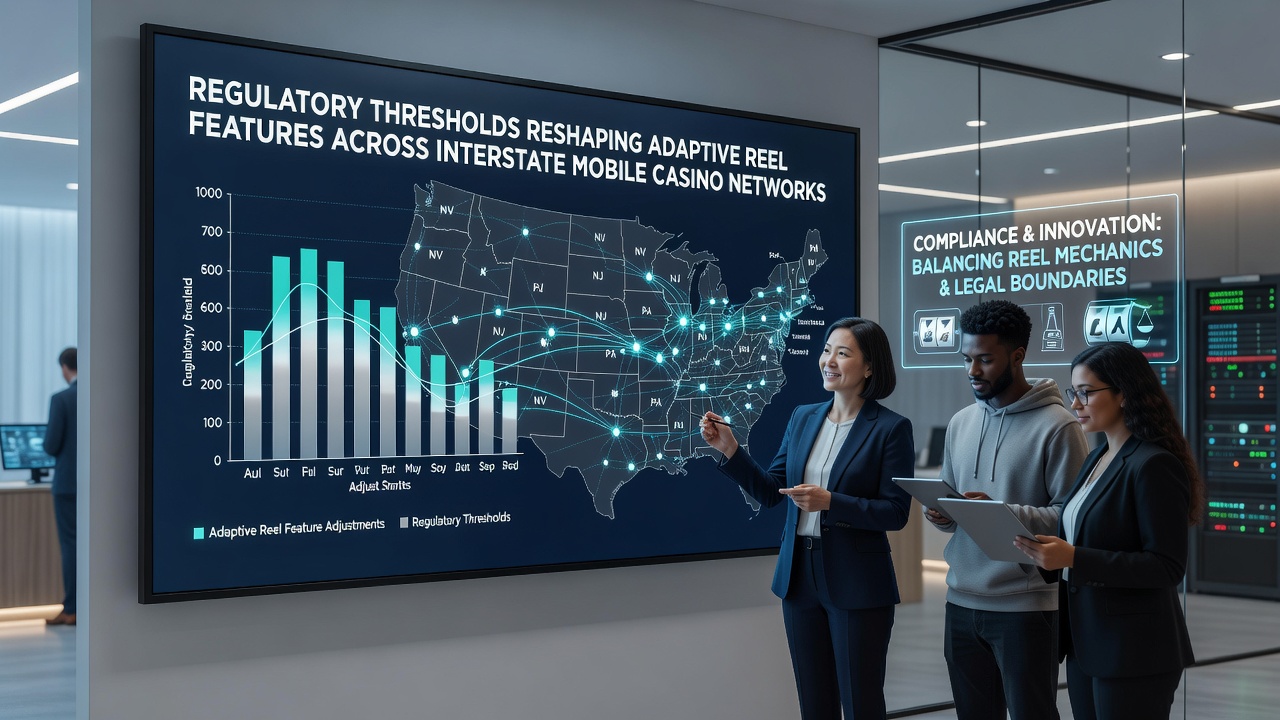
What's notable is the role of application programming interfaces that pull from centralized compliance databases, enabling seamless shifts in reel behavior as players move between state lines. Industry organizations such as the American Gaming Association have tracked these developments, noting that networks handling over 45 million monthly active users now rely on these interfaces to avoid violations while preserving engagement metrics that remain consistent across regions.
Technical Implementation of Adaptive Features
Developers integrate machine learning models that predict which reel adaptations will satisfy thresholds without reducing playtime below acceptable levels, and these models draw on anonymized session data collected under strict privacy protocols. Evidence from platform audits indicates that features like dynamic payline adjustments and progressive jackpot triggers now incorporate regulatory flags that activate or deactivate based on user profiles and location data, creating a layered experience that evolves during a single session.
Those who've studied these systems know the complexity arises when thresholds overlap, for instance when a loss-limit rule coincides with a spin-frequency cap, forcing the software to prioritize one adaptation over another through predefined hierarchies. Case examples from networks operating in the Midwest show that such prioritization logic reduced compliance incidents by 18 percent in the first half of 2026, according to internal metrics shared with state regulators.
Future Outlook for Compliance Integration
As more states finalize their mobile gaming frameworks, the pressure on adaptive reel technologies will likely intensify, prompting further refinements in how features respond to evolving thresholds. Reports from the Canadian Gaming Association highlight parallel trends in cross-provincial networks, where similar adaptation strategies have emerged to manage regional differences, offering a comparative view for U.S. operators expanding their models.
Conclusion
Regulatory thresholds continue to reshape adaptive reel features across interstate mobile casino networks through targeted technical updates that balance compliance with operational continuity. Data indicates sustained investment in these systems as platforms scale, with coordination among states and operators determining how effectively the next wave of adjustments integrates into existing infrastructure.